Shiny, foiled and glittery wraps are often plastic film or carry decorations mills cannot use. UK recycling guidance offers a ten-second test, and Japan offers a cloth that can wrap a present again and again.
Pick something from the pile after the presents are open. The bar shows how likely it is to be recyclable at home, according to Recycle Now.
Councils differ: some accept plain wrapping paper and some do not, because not every recycled paper mill takes it. Check your own council.
TWO NUMBERS WORTH KNOWING
A lot of card, a very old cloth.
One figure on Christmas packaging, one on how long cloth wrapping has lasted.
≈ 300,000 tonnes
Card packaging used at a UK Christmas
WRAP estimated the UK uses almost 300,000 tonnes of card packaging at Christmas, and said all UK councils accept paper and 98% accept card.
CHRISTMAS CARD · WRAP 2015
1,200+ years
Age of the earliest wrapping cloths
The first furoshiki were used in Japan's Nara Period, more than 1,200 years ago, to wrap the valuables of emperors and noblemen.
FUROSHIKI · TOKYO GOVERNMENT
WRAP launched the scrunch test advice in a 2015 Recycle Now campaign, noting that shiny and metallic wrapping papers were not recyclable.
FOUR STEPS AFTER THE PRESENTS
Sort the pile in two minutes.
A quick routine for the heap of wrapping on the floor, based on Recycle Now's advice.
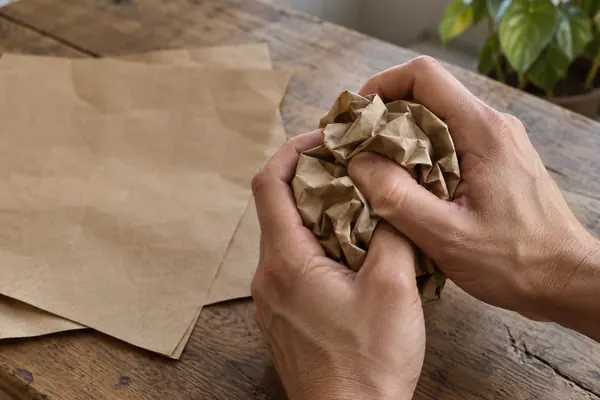
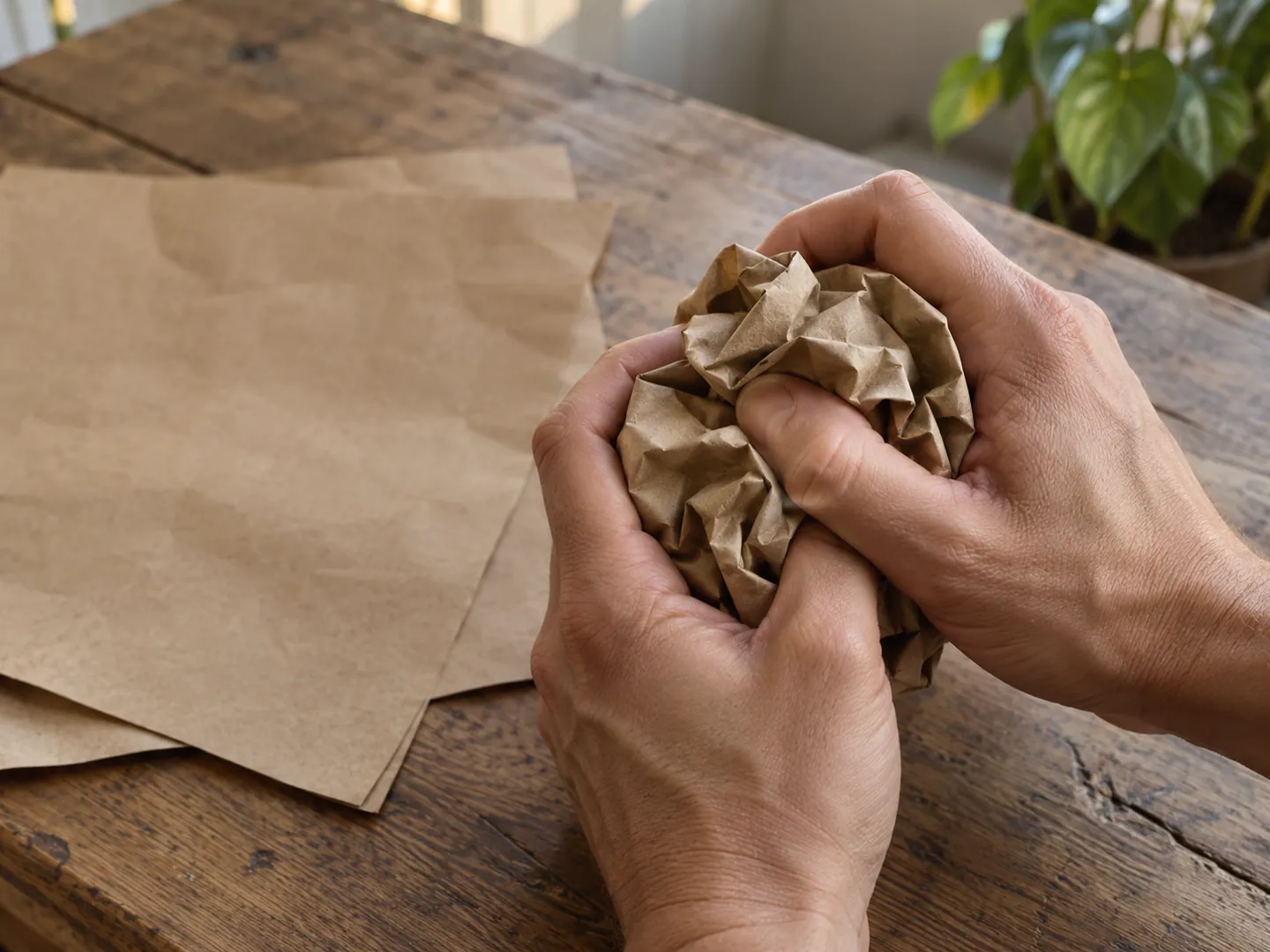
Scrunch each sheet
Stays in a ball: a candidate for recycling. Springs back: it is likely plastic film and goes in the general waste.
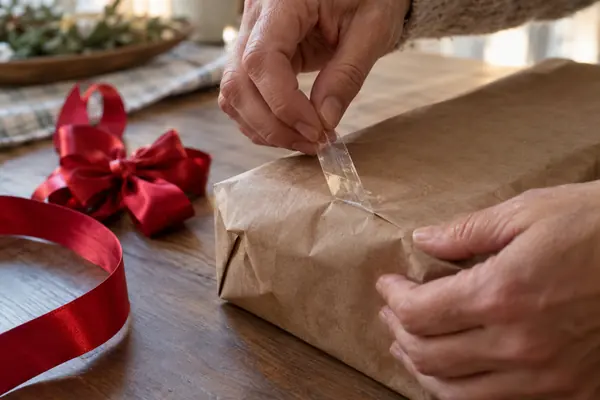
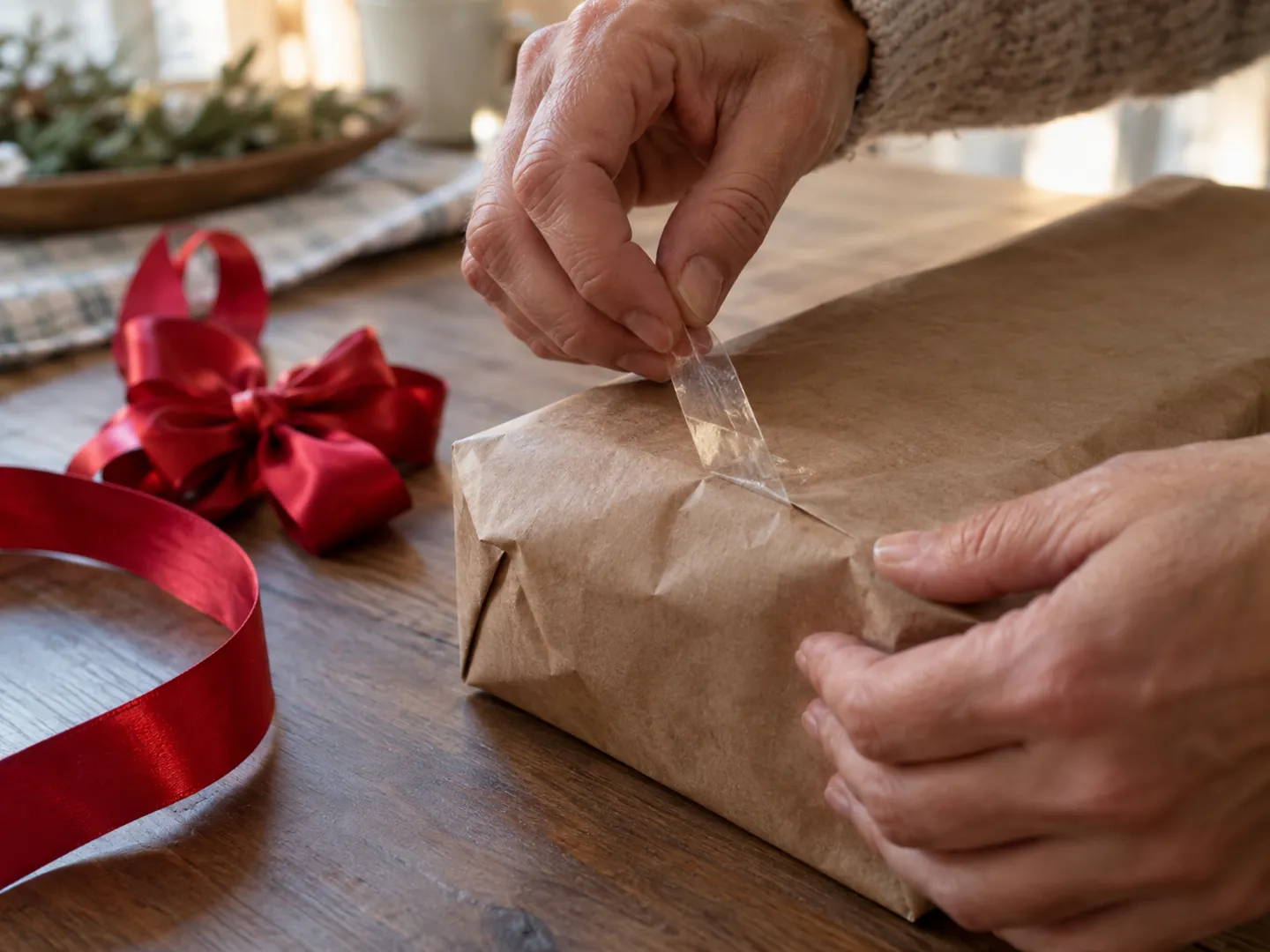
Peel off tape, ribbons and bows
None of these can be recycled with the paper. Keep good ribbons and bows to use again.
Check what your council takes
Some councils accept plain wrapping paper and some do not, because thin, dyed or laminated paper has few good fibres.
Try a cloth next time
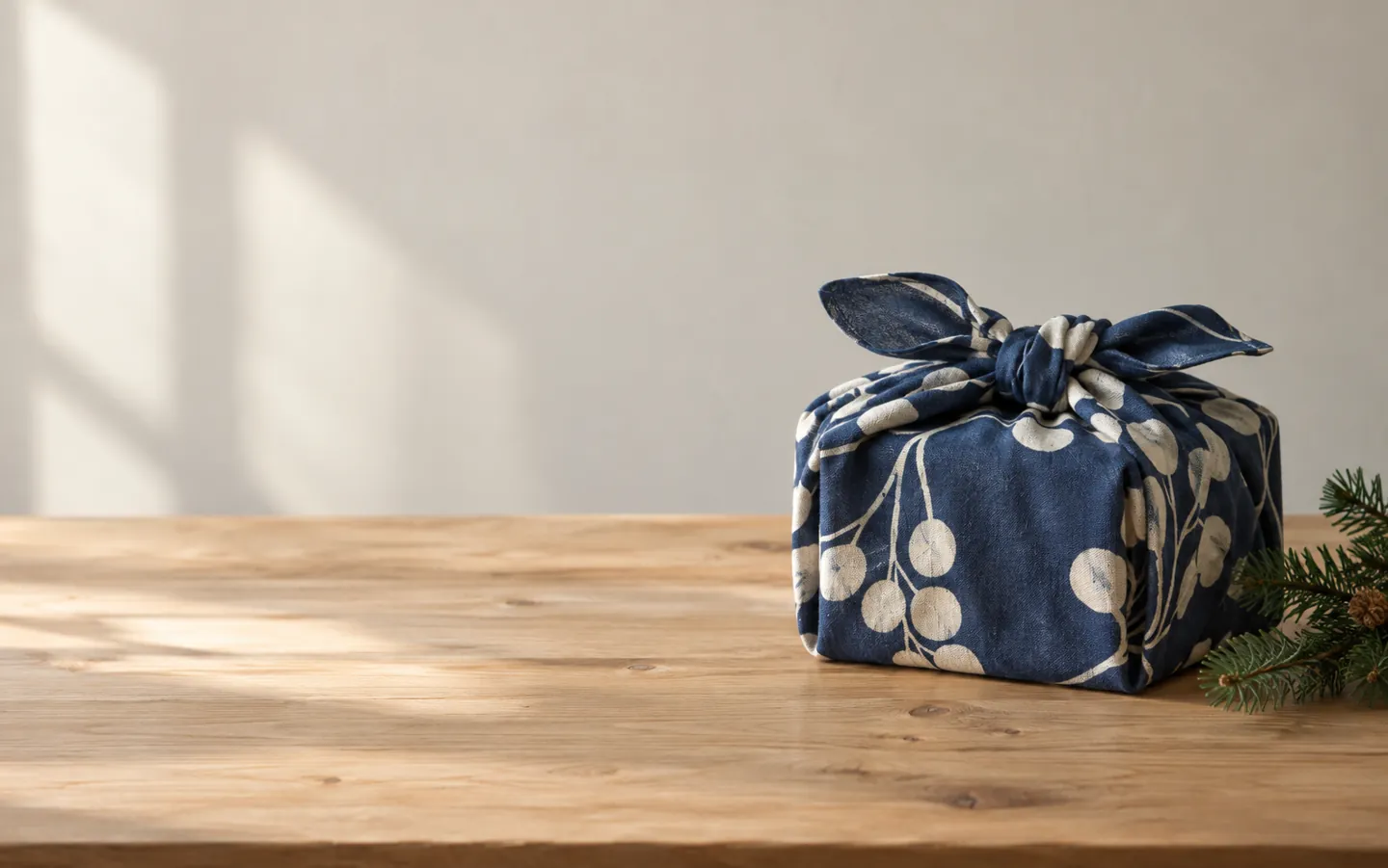
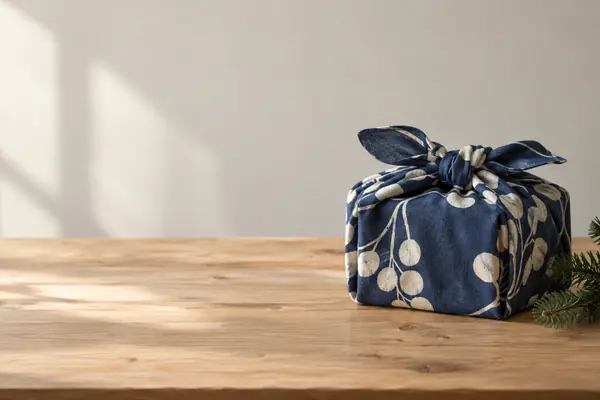
A furoshiki or any square of fabric can be folded and knotted around a gift, then handed on or reused.
AI-generated image, not a photograph of a real person or place.AI-generated image, not a photograph of a real person or place.
FUROSHIKI
One square, many wraps.
A furoshiki is a traditional Japanese wrapping cloth. Early on it served as a bath mat and a bundle for clothes, and merchants used it to carry their wares. Its use declined after the Second World War as plastic bags took over.
In March 2006 Japan's then Minister of the Environment launched the Mottainai Furoshiki campaign, roughly 'use a furoshiki to avoid waste'. Named wraps include the basic carry wrap, a flat object wrap, a hidden knot wrap and a flower wrap.
QUESTIONS PEOPLE ASK
Gift wrap and furoshiki questions
Can wrapping paper be recycled?
Sometimes. Recycle Now says simple paper wrap that passes the scrunch test can be recycled where your council accepts it. Some councils do not, because some recycled paper mills will not take it.
What is the scrunch test?
Scrunch the paper in your hand. If it stays in a ball it can go in the recycling, according to WRAP; if it springs back it is most likely metallised plastic film and not recyclable.
Why can't shiny wrapping paper be recycled?
Much wrapping paper is dyed, laminated or carries gold and silver shapes, glitter or plastics that cannot be recycled, and some is so thin it has few good-quality fibres.
Do I need to remove sticky tape?
Yes. Recycle Now says sticky tape is not recyclable and should go in the general waste, and to remove loose strands from wrapping paper and boxes before recycling them.
What is furoshiki?
A traditional Japanese square wrapping cloth, first used more than 1,200 years ago. It can wrap almost anything with the right folds and be used again, and Japan promoted it in a 2006 campaign against waste.
Why does gift wrapping matter so much in Japan?
The Tokyo Metropolitan Government's furoshiki feature says wrapping even small things neatly and attractively is still part of Japanese culture: carefully wrapping a gift implies respect for the recipient, and handing over something unwrapped is considered impolite. A furoshiki lets you do that without paper.
What does mottainai mean?
Roughly, that it is a shame for something to go to waste without making full use of its potential. Launching the Mottainai Furoshiki campaign in March 2006, Japan's then Minister of the Environment unveiled a furoshiki made from a fibre manufactured from recycled PET plastic bottles, with a birds-and-flowers motif drawn by the Edo-period painter Ito Jakuchu.